-
Oak Brook
📍📞 630-705-99992625 Butterfield Rd. Suite 102E
Oak Brook, IL 60523📠 Fax: 630-705-1422✉️ inquiry@vervecollege.edu 🗺️ Open in Google Maps 🍎 Open in Apple Maps🕒Office HoursMon–Fri: 9:30 AM – 6:00 PM
Sat: 8:00 AM – 12:00 PM
Sun: Closed -
Chicago
📍📞 312-920-8822216 W. Jackson Blvd. Suite 900
Chicago, IL 60606📠 Fax: 630-705-1422✉️ inquiry@vervecollege.edu 🗺️ Open in Google Maps 🍎 Open in Apple Maps🕒Office HoursMon–Fri: 9:30 AM – 6:00 PM
Sat: 8:00 AM – 12:00 PM
Sun: Closed - Email:inquiry@vervecollege.edu
- Make a Payment
 Sign up
 Login
Login
- Home
- Programs
- Admission
- Resources
- ATI Entrance Exam Resources
- New E-Digital Library
- Refer a Friend
- School Newsletter
- Events
- Employers
- Job-Network
- Alpha Beta Kappa Candidates
- Verve College Library
- Graduation and Pinning Ceremony Photo Galleries
- Textbook Information
- Career Services
- Tutoring
- School Catalog
- FAQ
- Constitution Day Program
- Alumni
- Verve College Plans
- Financial Aid
- HEERF Reporting
- Satisfactory Academic Progress
- Apply For Financial Aid
- Net Price Calculator
- Return of Title IV Funds (R2T4)
- Financial Aid Office Code of Conduct
- Contact
- FAQs
- Verification Policy
- Vaccination Policy
- Student Right-to-Know Act
- Misrepresentation
- Information Security Program
- Academic Award Year
- Availability of Employee
- Cost of Attendance
- Health & Safety Exemption Requirement
- Students Rights and Responsibilities
- Leave of Absence
- Pell Formula
- Military Students
- Grants/ Scholarship Policy
- Contact Us
- Testimonials
- Blog
Is a Nursing Career Right For You?
Take The Free QuizNursing Lab Equipment Every Student Should Know
Nursing Lab Equipment Every Student Should Know
When you step into a skills lab for the first time, you’ll be surrounded by equipment that probably looks unfamiliar and maybe even intimidating. But here’s the truth: every single piece of nursing lab equipment in that room serves a specific purpose, and learning how to use it confidently is one of the best investments you can make in your nursing education. Understanding nursing lab equipment isn’t just about checking boxes during your training; it’s about building the hands-on skills and confidence you’ll need when you transition from the lab to real patient care.
This guide walks you through the essential equipment you’ll encounter as a nursing student, what each tool does, why you practice with it, and how this foundational knowledge sets you up for success in any clinical setting.
Key Takeaways
- Nursing lab equipment is organized into categories like vital sign monitors, diagnostic tools, medication administration devices, and patient care equipment, each teaching specific clinical skills.
- Hands-on practice with equipment in a controlled lab environment helps you develop accuracy, confidence, and muscle memory before working with real patients.
- Proper equipment handling, infection prevention, and documentation skills learned in lab translate directly to patient safety and professional standards in clinical practice.
- Enrolling in structured nursing programs, such as the best nursing schools in Illinois, ensures you receive guided, supervised equipment training as part of your curriculum.
- Repeated practice builds technical competence and enables you to focus on patient communication and observation skills when you’re ready for clinical rotations.
Vital Sign Monitoring Equipment
Vital signs are the foundation of patient assessment. If you can’t measure temperature, heart rate, blood pressure, and oxygen saturation accurately, you can’t provide safe patient care. That’s why every nursing student spends time learning these tools.
Stethoscope
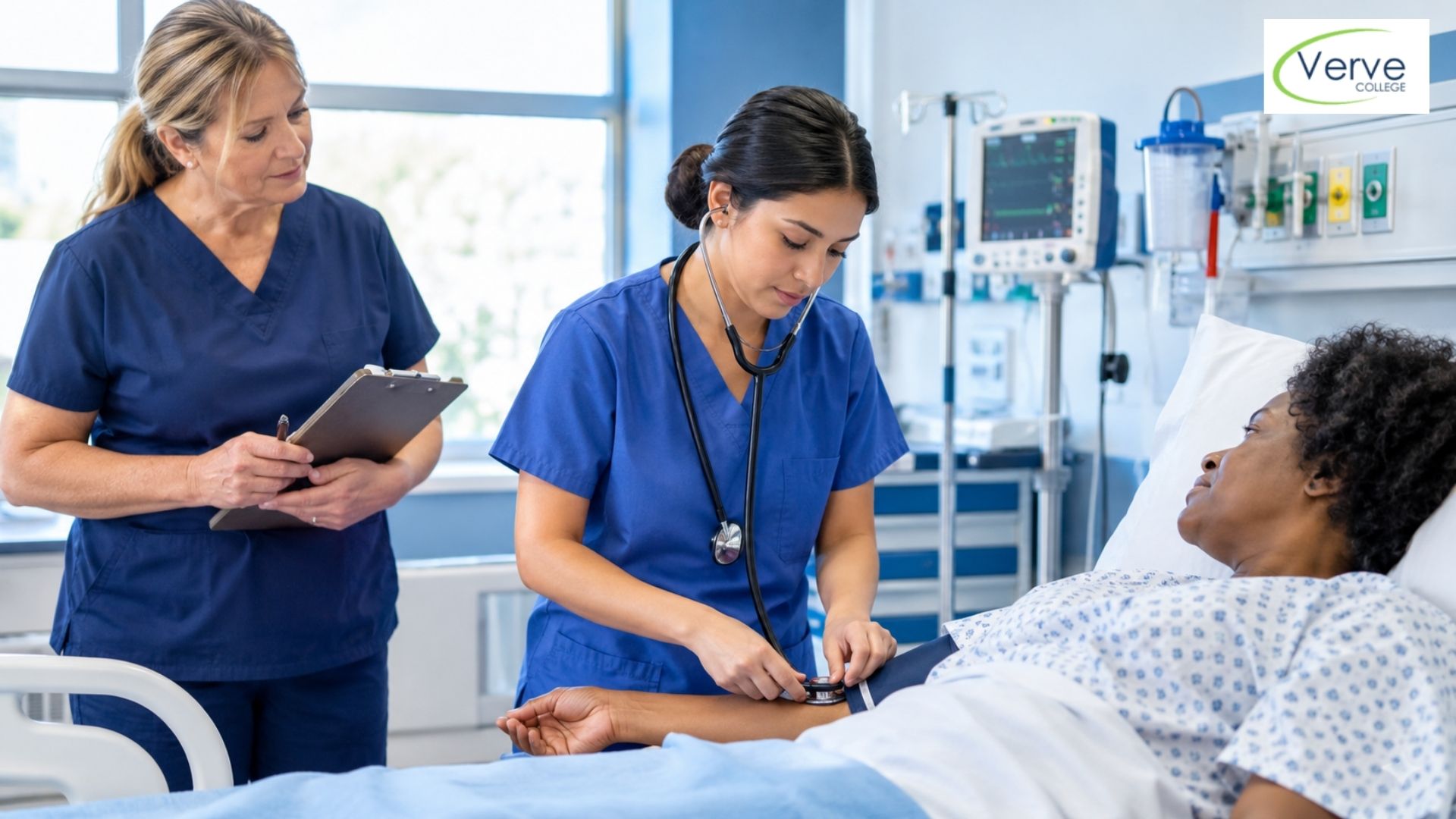
The stethoscope is your most personal piece of nursing lab equipment. You’ll use it to listen to heart sounds, lung sounds, and bowel sounds. During lab practice, you’ll learn the proper placement of the earpieces, how to position the diaphragm and bell correctly on the patient’s skin, and how to recognize normal versus abnormal sounds. This skill takes repetition, and getting comfortable with your stethoscope in a low-pressure lab setting means you’ll be ready when you need to assess a real patient.
Blood Pressure Cuff and Sphygmomanometer
Learning to take a blood pressure manually is a core nursing skill. You’ll practice wrapping the cuff correctly, identifying the right brachial artery, and listening for Korotkoff sounds through your stethoscope. Many labs also include digital blood pressure monitors so you can compare manual and electronic readings. Accurate blood pressure measurement is critical because it directly influences clinical decisions.
Pulse Oximeter
A pulse oximeter measures oxygen saturation and heart rate from a fingertip sensor. While these devices are straightforward to use, lab practice teaches you when readings might be inaccurate (poor circulation, nail polish, patient movement) and how to troubleshoot. You’ll learn the normal range (95-100%) and recognize when a reading is concerning enough to alert an instructor or supervising nurse.
Thermometer
Digital and temporal thermometers are standard in modern healthcare. In the lab, you’ll practice proper placement, timing, and understanding that different sites (oral, axillary, tympanic, temporal) can have slightly different readings. You’ll also learn about fever thresholds and how to recognize fever patterns that might signal infection.
Penlight
A simple penlight is used to check pupil response and examine the mouth and throat. During lab training, you’ll practice shining the light directly into the eye to assess how the pupil reacts, a key neurological assessment. This simple tool teaches observation skills that are vital in patient evaluation.
Diagnostic and Examination Tools
Beyond vital signs, nursing students practice with specialized equipment that helps identify patient problems early.
Reflex Hammer
The reflex hammer tests neurological function by evaluating how the nervous system responds to stimulation. In lab, you’ll learn the correct striking technique and how to position your patient’s limb for accurate testing. Abnormal reflex responses can indicate neurological problems, so accurate technique matters.
Otoscope and Ophthalmoscope
An otoscope lets you examine the ear canal and eardrum, while an ophthalmoscope allows you to look inside the eye. Both tools require practice to use correctly because you’re working in small, sensitive spaces. Lab practice builds your confidence so that when you use these on real patients, the procedure is quick and professional.
ECG Equipment
Electrocardiography (ECG) machines measure heart electrical activity. Students practice placing the 10 electrode pads correctly on the chest, understanding lead placement, and running the machine. This introduces you to more complex equipment and prepares you for cardiac patient monitoring in clinical settings. Many practical nursing programs in Illinois include ECG training as part of a comprehensive skills curriculum.
Medication Administration Equipment
Medication safety is non-negotiable in nursing. Your lab work with these tools directly impacts patient safety.
Syringes and Needles
You’ll practice drawing medication from vials, understanding different needle gauges, and preparing injections without contaminating the needle or medication. Lab mannequins let you practice intramuscular and subcutaneous injections safely. This repetition builds the muscle memory and precision that makes you efficient and confident during real medication administration.
Intravenous (IV) Equipment
IV training starts with IV arms or simulation models. You’ll practice inserting the catheter, securing it with tape, and connecting IV tubing. Understanding flow rates, checking for infiltration, and maintaining sterile technique are skills that take hands-on practice. Many nursing students feel nervous about starting IVs; practicing in the lab removes that anxiety before patient care.
Infusion Pumps
Modern healthcare uses programmable infusion pumps for controlled medication or fluid delivery. Lab practice teaches you how to set the pump, troubleshoot alarms, and verify that the medication is running at the correct rate. Understanding pump mechanics is essential because these devices keep patients safe by delivering precise doses.
Glucometer
A glucometer measures blood glucose levels. You’ll learn proper finger-stick technique, understanding that technique affects accuracy. You’ll also practice reading results and understanding what normal versus abnormal glucose levels mean clinically. For patients with diabetes, accurate glucose monitoring is routine care.
Patient Care and Mobility Equipment
Nursing isn’t just about taking vital signs or giving medications; it’s about helping patients move, maintain dignity, and stay safe.
Hospital Bed
The adjustable hospital bed might seem simple, but using it correctly prevents back injuries and patient falls. You’ll practice adjusting height, rails, and positioning. During lab, you’ll also practice safe patient handling techniques. Proper bed use reduces caregiver injury and improves patient comfort.
Wheelchairs and Transfer Equipment
Moving patients safely is a core nursing responsibility. Lab practice teaches you how to lock brakes, position footrests, and navigate tight spaces. Transfer training using patient lift equipment prevents both patient injury and back strain in caregivers. These skills are taught once and used countless times in your career.
Patient Simulation Mannequins
High-fidelity simulation mannequins respond to your actions. When you practice inserting an IV, the mannequin simulates bleeding. When you listen with a stethoscope, you hear pre-recorded lung or heart sounds. These mannequins create realistic practice scenarios that challenge your decision-making and assessment skills before you work with real patients.
Bedside Commode and Bedpan
These tools assist with patient hygiene and elimination. Lab practice normalizes using these pieces of equipment with dignity and efficiency. It might feel awkward at first, but practicing in a judgment-free lab environment builds confidence for real patient care.
Personal Protective Equipment (PPE)
PPE protects both you and your patients. Lab practice builds the muscle memory for proper donning and doffing (putting on and taking off) masks, gloves, gowns, and eye protection. Understanding when each type of PPE is required and how to use it correctly prevents infection transmission and is a core patient safety standard.
Advanced Practice Equipment
As you progress, you’ll encounter more specialized equipment depending on your track.
Wound Care Supplies
Nursing lab equipment for wound care includes sterile dressing materials, irrigation trays, and various bandage types. You’ll practice sterile technique while changing dressings on mannequin models. Proper wound care prevents infection and promotes healing, making this skill critical.
Catheterization Equipment
Urinary catheters are commonly used in healthcare settings. Lab practice with mannequins teaches proper insertion technique and maintenance without exposing students or patients to infection risk. This is another example of how controlled lab environments let you master skills before patient application.
Nursing Lab Equipment Comparison Table
The following table provides a quick overview of common nursing lab equipment, its primary purpose, and the nursing skills students develop through hands-on practice.
| Equipment | Primary Purpose | Nursing Skill Practiced |
|---|---|---|
| Stethoscope | Listen to heart, lung, and bowel sounds | Physical assessment and auscultation |
| Blood Pressure Cuff | Measure arterial pressure | Vital sign assessment and manual technique |
| Pulse Oximeter | Measure oxygen saturation | Technology use and normal value recognition |
| Thermometer | Measure body temperature | Vital sign assessment across different sites |
| Reflex Hammer | Test neurological response | Neurological assessment |
| Otoscope/Ophthalmoscope | Examine ear and eye structures | Focused physical assessment |
| Syringe and Needle | Administer injectable medication | Aseptic technique and injection routes |
| IV Catheter | Establish vascular access | Venipuncture and line management |
| Infusion Pump | Deliver fluids and medication precisely | Technology management and safety verification |
| Glucometer | Measure blood glucose | Point-of-care testing and normal value recognition |
| Hospital Bed | Support patient positioning and safety | Ergonomics and patient safety |
| Wheelchair | Transport patients safely | Mobility assistance and safety |
| Simulation Mannequin | Practice skills realistically | Comprehensive assessment and intervention |
| Bedside Commode | Assist with elimination | Patient hygiene and dignity |
Common nursing equipment and the practical skills students develop through hands-on training and simulation.
Why Practice with Nursing Lab Equipment Matters
Using equipment correctly isn’t optional in nursing; it’s foundational. When you practice in a lab, you’re not just learning how to push a button or place a cuff. You’re developing the accuracy that directly impacts patient safety. Inaccurate vital sign readings can lead to missed diagnoses. Poor IV technique can cause patient harm. Contaminated wound care can cause infection.
Lab practice also builds your confidence. The first time you draw blood from a person can be stressful, but if you’ve practiced 20 times on a mannequin with instructor feedback, you walk into that patient room ready. Confidence translates into smoother procedures, faster completion, and better patient experience.
Beyond technical skill, practicing with nursing lab equipment teaches you to follow protocols and document accurately. You’ll learn why double-checking medication doses matters, why sterile technique isn’t negotiable, and why clear communication during procedures keeps everyone safe. These habits, built during supervised lab training, become automatic in your clinical practice.
How Lab Training Prepares You for Clinical Practice
The transition from lab to clinical setting feels big, but it doesn’t have to be scary. Skills labs exist specifically to bridge that gap. When you arrive at your clinical rotation, you’ve already done the foundational work.
Your instructors in skills labs create realistic scenarios that mirror clinical situations. You practice under supervision, receive immediate feedback, and can repeat procedures until you’re proficient. This controlled learning environment is where mistakes become learning opportunities instead of patient safety incidents.
Understanding how hands-on learning works in anatomy practical sessions also helps you recognize that nursing lab training follows the same principle: the more you engage with physical equipment and real scenarios, the deeper your learning becomes. When you move to clinical practice, you’re not learning equipment for the first time; you’re applying skills you’ve already practiced.
Lab training also teaches you to ask questions and seek clarification. Your instructors expect questions during lab practice. This mindset continues in clinical settings, where asking for help before a procedure is always the right choice. Confidence doesn’t mean you never need help; it means you know when to ask.
Getting Started with Your Equipment Education
If you’re considering nursing education, choosing a program that prioritizes hands-on equipment training is essential. Not all programs give equal time to skills labs, and that matters for your preparation and job readiness.
If you’re searching for the best nursing schools in Illinois, look for programs that emphasize equipment training and low student-to-instructor ratios during lab sessions. You want feedback from experienced nurses who understand clinical practice. Verve College’s Practical Nursing Program includes dedicated skills lab time with supervised practice of all equipment covered in this article.
For working adults or students balancing other commitments, a hybrid practical nursing program offers flexibility without sacrificing hands-on training. You’ll attend in-person lab sessions for equipment practice while completing theory online. This approach lets you build competence with actual equipment while managing your schedule.
Your nursing lab equipment education doesn’t end after your program, either. As you advance in your career, you’ll encounter new technologies and specialized equipment. The foundational skills and learning habits you build now make that transition easier.
Conclusion
Nursing lab equipment is the bridge between theory and practice. Every stethoscope, every syringe, every simulation mannequin exists to help you build skills safely before patient care. When you understand what equipment does, why it matters, and how to use it properly, you’re not just preparing for exams; you’re preparing for a career where your technical competence directly impacts patient safety and outcomes.
Taking nursing lab training seriously means investing in your future as a nurse. The confidence and skills you build with equipment in a supportive lab setting carry forward into every clinical rotation and every year of your nursing career. If you’re ready to start that journey, Verve College’s practical nursing programs provide the equipment-focused training and instructor support you need to succeed.
Get Your Nursing Career Training Readiness Score Now!
Frequently Asked Questions (FAQs)
What is the most important nursing lab equipment for beginners to master first?
Vital sign monitoring equipment (stethoscope, blood pressure cuff, thermometer, and pulse oximeter) should be your starting point. These tools form the foundation of patient assessment and are used in virtually every patient interaction. Mastering vital sign assessment builds confidence and teaches you the fundamentals of accurate measurement and documentation.
How many times should I practice with equipment before I’m ready for clinical practice?
There’s no magic number, but most nursing programs require repeated practice (typically 10-20+ attempts) with instructor feedback on core skills like vital signs, injections, and IV starts. You’re ready when you can perform the skill accurately and consistently without prompting, understand the rationale behind each step, and can troubleshoot when something goes wrong. Your instructor will let you know when you’ve met competency.
Do I need to own personal nursing lab equipment before starting a program?
Most programs provide equipment during lab sessions, so you don’t need to purchase everything upfront. However, many students find it helpful to own a personal stethoscope, penlight, and reflex hammer for extra practice. Your program will tell you what, if anything, you should bring. When you’re deciding on a program, ask about equipment provision during your program inquiry.
Most Popular Blogs Posts

LPN School for Working Adults: What…
October 15, 2026 Read More
How to Prepare for Nursing School…
October 14, 2026 Read More
How Practical Nursing Students Build Clinical…
October 14, 2026 Read More
What Is Capillary Refill? A Guide…
October 13, 2026 Read More